


The role of computer graphics in gaming and esports
Most players rarely stop to think about how the image on their screen is actually generated. What matters more to them is smooth animation, a sharp picture, stable frame rates, and quick responsiveness to their inputs. These demands shape the development of computer graphics just as much as developers’ pursuit of spectacle and realism.
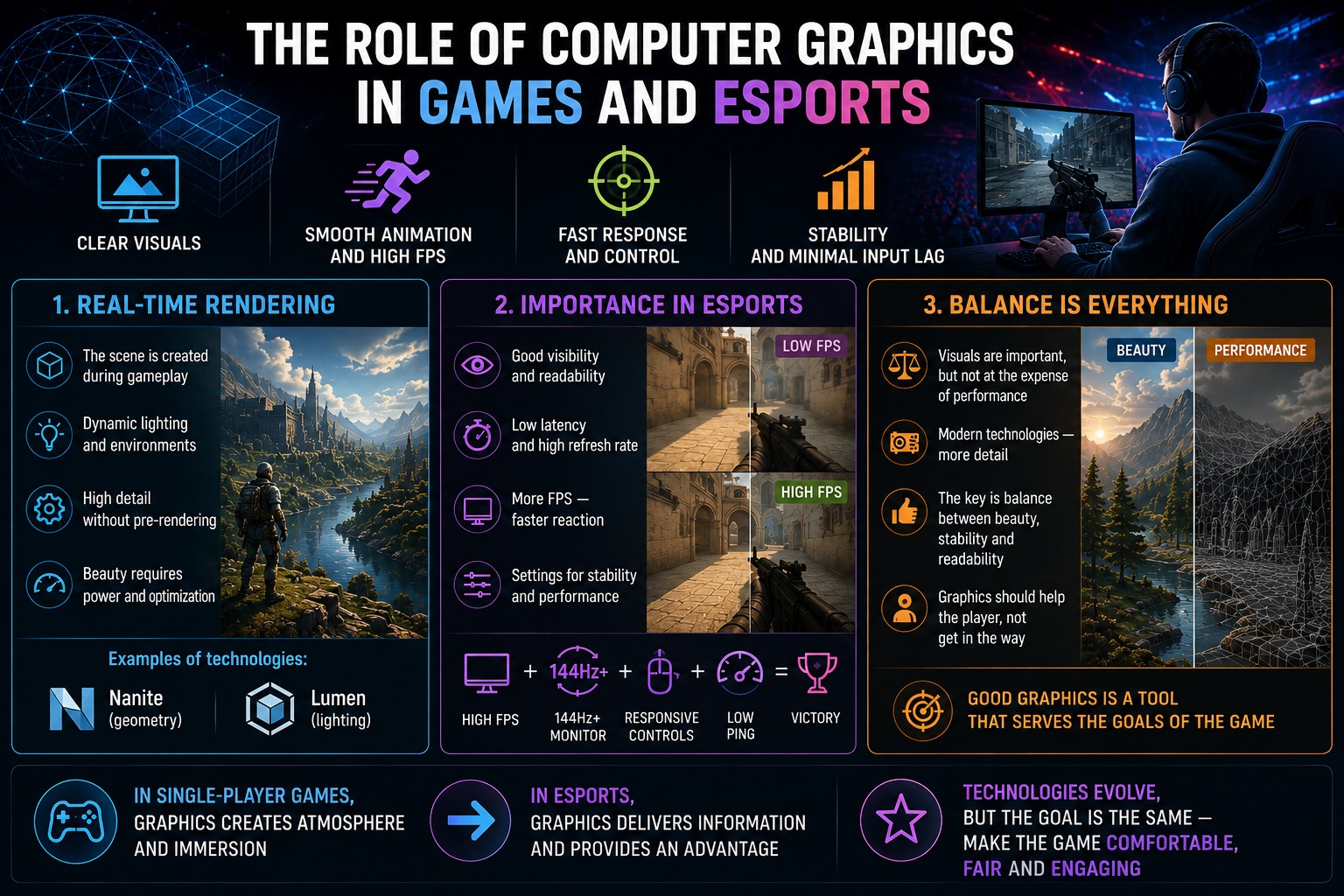
Computer graphics have long since moved beyond being purely decorative. They influence how players perceive the virtual world, how clearly, they can read what’s happening on screen, and how comfortably they can interact with the game. In single-player titles, visual technologies help build atmosphere and deepen immersion, while in competitive games, image clarity, stability, and minimal input lag take center stage.
Real-time rendering
In games, images are generated on the fly during gameplay itself. Unlike film, where frames can be pre-rendered in advance, a game engine must constantly respond to player actions, camera position, lighting conditions, and environmental changes.
Modern technologies make it possible to handle highly detailed geometry, complex lighting, and dense scenes without any pre-rendering. For example, Nanite and Lumen in Unreal Engine 5 are designed to handle high-fidelity geometry and dynamic global illumination, respectively. In Fortnite, both technologies were introduced when Battle Royale made the switch to Unreal Engine 5.1.
That said, visual fidelity comes at a cost. The more complex the scene, the heavier the load on the GPU and other system components. This is why developers must balance visual ambition with optimization — a game needs to run well across a wide range of hardware configurations.
Why graphics matter so much in esports
In competitive games, visuals serve primarily as an information delivery system. Players need to quickly spot opponents, track movement, judge distances, and react in real time. In Counter-Strike 2 and other fast-paced titles, even a slight delay between an action and its on-screen representation can make a difference. Esports research also highlights the importance of low latency and high refresh rates for executing rapid in-game actions.
This is why professional players often dial back certain graphics settings. Doing so helps boost frame rates, reduce system load, and eliminate unnecessary visual clutter. In competitive play, peak realism typically takes a back seat to stability, clean visibility, and responsive controls.
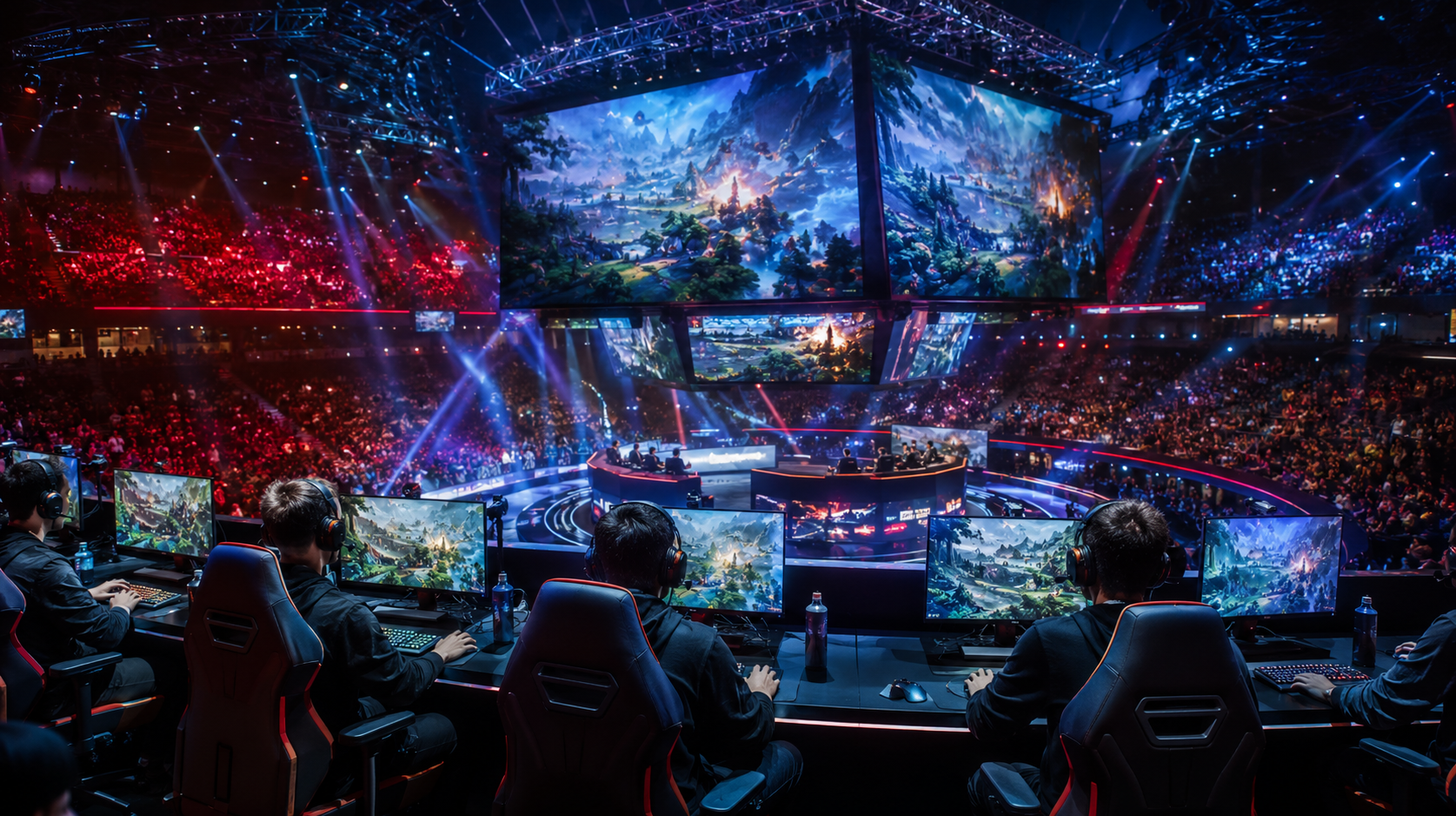
What gives players an edge isn’t better-looking graphics on their own, but rather the combination of high performance, a high-refresh-rate monitor, and low system latency. That’s why hardware selection and proper system tuning have become a core part of competitive preparation.
Balancing visual quality and performance
Developers continue to push for more expressive game worlds, while GPU manufacturers deliver technologies capable of handling increasingly complex scenes. But for players, balance is everything. Stunning lighting, realistic reflections, and detailed environments lose their value if they cause significant frame rate drops or make it harder to read the action on screen.
This is why the role of computer graphics in modern games is inherently dual. In traditional titles, visuals help build atmosphere and heighten emotional impact, while in esports they function primarily as a tool for conveying precise, actionable information. Great graphics aren’t about maxing out every visual effect — they’re about creating a visual system that serves the game’s goals and empowers players to act quickly and confidently.