


How game engines power modern computer games
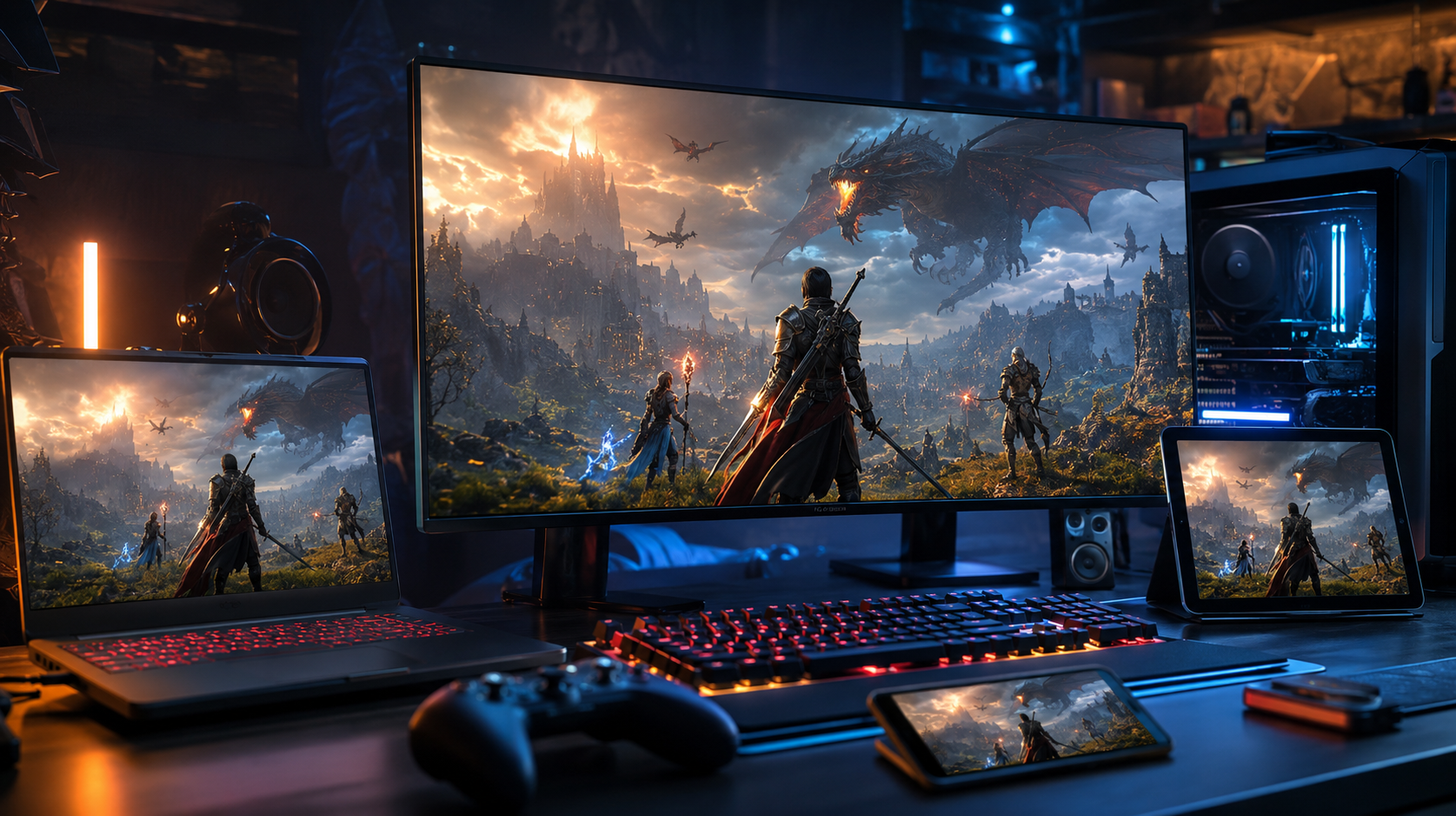
A game engine is the software foundation that connects game code, graphics, audio, physics, and input handling to the operating system and hardware of a computer. Developers don’t have to build a rendering pipeline, collision detection system, or asset loader from scratch every time — the engine provides ready-made modules and ties them together into a unified process.
How the game loop works
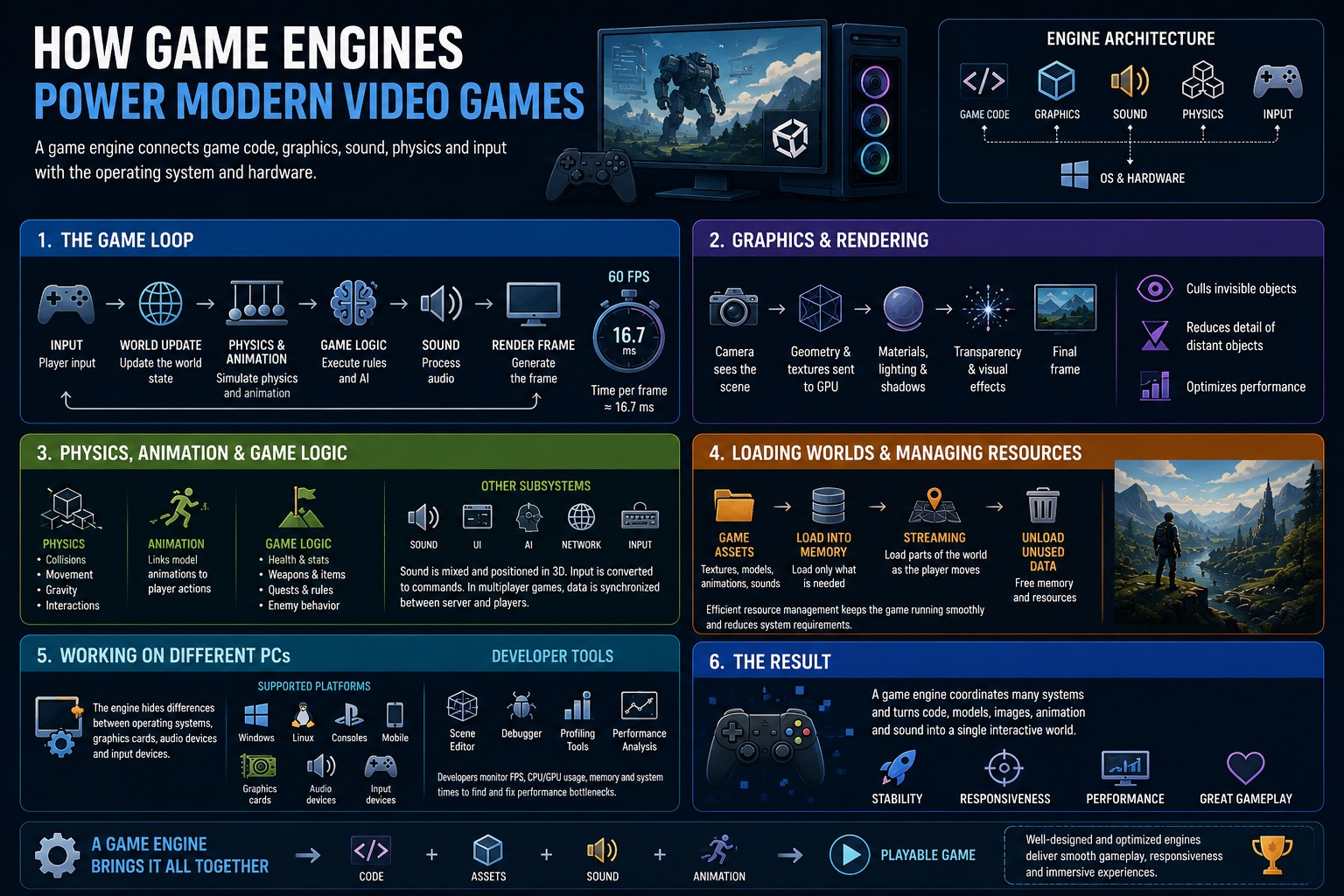
While a game is running, the engine continuously repeats the same cycle: it reads input from a keyboard, mouse, or gamepad, updates the state of the world, calculates physics and animation, executes game logic, processes audio, and renders a new frame — all in a fraction of a second. At 60 frames per second, for example, the engine has roughly 16.7 milliseconds to prepare each frame. That’s why engines are designed to carefully distribute the workload between the CPU and GPU.
Graphics and frame rendering
The rendering system is responsible for everything you see on screen. It determines which objects fall within the camera’s view, sends geometry and textures to the GPU, and calculates materials, lighting, shadows, transparency, and visual effects. To avoid wasting processing power, the engine can skip objects that aren’t visible and reduce the level of detail for elements far from the camera.
Physics, animation, and game logic
The physics system handles collision detection, rigid body movement, gravity, and object interactions. It’s what keeps a character grounded on a surface, makes a car react to bumps on a track, and causes objects to fall and collide. The animation system connects model movements to player actions, while the game logic layer defines the rules: character health, weapon behavior, quests, enemy AI, and win conditions.
Separate subsystems handle audio, UI, artificial intelligence, and networking. The audio module mixes multiple sound sources, accounts for their position in 3D space, and applies effects. The input system translates player actions into in-game commands, and in multiplayer games, the networking layer synchronizes the necessary data between the server and each player’s machine.
World streaming and asset management
Modern games contain a large amount of textures, models, animations, and audio files. The engine loads the data it needs into memory and releases assets that are no longer in use. In large open-world games, sections of the environment can be streamed in as the player moves through them. This makes it possible to avoid keeping the entire game world in memory at once, reducing the overall demands on system resources.
Running across different hardware
Another key responsibility of a game engine is to abstract away most of the differences between operating systems, graphics cards, audio devices, and input hardware. Rather than rebuilding all low-level systems from scratch, a development team works with a shared set of tools while the engine handles communication with the appropriate APIs and hardware.
Modern engines also include scene editors, debugging tools, and performance profiling utilities. These help developers monitor frame rates, CPU and GPU load, memory usage, and the execution time of individual systems — and then address any bottlenecks that come up.
A game engine isn’t simply a program where games are “put together.” It’s a complex software layer that coordinates a wide range of systems and transforms code, models, artwork, animation, and audio into a single interactive world. The stability of the game, the responsiveness of its controls, and the overall quality of the experience all depend directly on how smoothly and efficiently those systems work together.